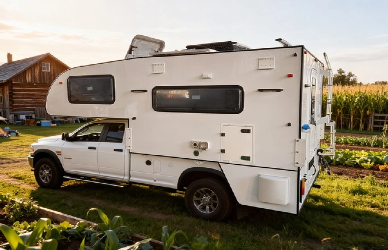
Truck campers have become a popular choice for outdoor enthusiasts and those seeking off-grid living, offering a unique blend of mobility and comfort. Whether it's for weekend camping trips, cross-country road trips, or full-time living, truck campers provide the flexibility to explore diverse landscapes while enjoying the comforts of home. However, before hitting the road, it's crucial for truck camper owners to understand the legal driving requirements. While many people assume that driving a truck camper is similar to driving a standard vehicle, there are specific laws and regulations that vary by region. Understanding whether a special driving license is required, based on the size and weight of the camper, can help avoid legal issues and ensure a safe and smooth driving experience.
General Driving License Requirements
The licensing requirements for driving a truck camper depend on factors like region, weight, size, and use (personal or commercial). Here’s a breakdown of what to consider:
1. Standard Car License
In most regions, a standard driver’s license (Class D or equivalent) is sufficient for truck campers within a certain weight range—usually 10,000 to 12,000 pounds (4,500 to 5,400 kg). For personal-use truck campers, this is typically the case, and you can drive with a regular license once you pass the standard driving test.
2. Special Licensing Requirements
If the truck camper exceeds certain weight limits or is used commercially, a special license may be required. Examples include:
United States: A Class B Commercial Driver’s License (CDL) is required if the combined weight of the truck and camper exceeds 26,000 pounds (11,793 kg). This is common for larger motorhomes or heavy truck campers.
Canada: A Class 3 or Class A license is required for vehicles over 26,000 pounds (11,794 kg), depending on the province.
Commercial Use: If the truck camper is used for business (e.g., rentals), a commercial license may be needed, regardless of the weight.
3. Other Considerations
Towing: If towing a trailer or another vehicle behind the truck camper, you may need a towing endorsement or a special Class C license for vehicles towing over 10,000 pounds (4,500 kg).
International Requirements: Licensing laws vary by country. For example, in Europe, stricter weight limits apply, and some countries may require additional training or permits for truck campers.
When a Special License May Be Required
While most truck campers can be driven with a standard driver’s license, certain conditions may require a special license, particularly based on weight, size, or commercial use.
1. Exceeding Weight Limits
A special license is often required if the combined weight of the truck and camper exceeds certain thresholds.
United States: A Class B CDL is needed for vehicles over 26,000 pounds (11,793 kg). If towing a heavy trailer, a Class A CDL is required.
Canada: A Class 3 or Class A license is necessary for vehicles exceeding 26,000 pounds.
Europe: In many countries, vehicles over 3.5 tons (7,716 pounds) may require a Category C or Category D license.
2. Commercial-Grade Vehicles
If the truck camper is used for commercial purposes, like rentals or transporting passengers, a commercial license may be required, regardless of the camper's weight.
Class A CDL is needed for larger vehicles with trailers over 10,000 pounds.
Class B CDL is required for single vehicles (like large truck campers) exceeding 26,000 pounds.
3. Towing Requirements
If towing a trailer with your truck camper, you may need a special license or endorsement. Many areas require additional qualifications if towing trailers over 10,000 pounds.
Towing Endorsements: Some regions require a specific endorsement for towing heavy trailers.
4. International or Specialized Use
If driving abroad or using a truck camper for business, special permits or licenses may be required based on local regulations.
Weight and Size Considerations
The size and weight of a truck camper directly influence whether a special driver’s license is required. These factors determine if your vehicle falls into a category that mandates special licensing, such as a commercial driver’s license (CDL). Here's a breakdown of how weight and size impact legal requirements.
1. Weight Thresholds for Special Licenses
In most regions, there are specific weight limits that dictate if a special license is needed for driving a truck camper. Typically:
United States: A Class B CDL is required for vehicles exceeding 26,001 pounds (11,793 kg). If towing a trailer over 10,000 pounds (4,500 kg), a Class A CDL is needed.
Canada: A Class 3 or Class A license is required for vehicles over 26,000 pounds (11,793 kg). A Class 1 is needed for commercial vehicles with heavy loads or trailers.
European Union: Vehicles over 3.5 tons (7,716 pounds) may require a Category C or Category D license, with heavier combinations needing a Category CE license for towing.
2. Size Considerations
Size also matters, particularly in terms of length and height. Large trucks and campers may need special permits to travel on roads with restricted size or height limits. Vehicles with more than two axles may also require special licenses.
3. Commercial vs. Personal Use
Truck campers used for commercial purposes (e.g., rentals or passenger transport) often require a special license, regardless of weight or size. In the U.S., a Class A or B CDL may be needed if the vehicle is for hire.
Commercial Use: For business or passenger transport, a special CDL is required.
Personal Use: Personal-use truck campers typically require a standard driver’s license if under weight limits.
4. Towing Implications
Towing a large trailer behind your truck camper also requires attention to weight. If towing a trailer over 10,000 pounds, a Class A CDL is generally needed.
Licensing by Region
Licensing requirements for truck campers vary by region, influenced by the weight, size, and use (personal vs. commercial). Here’s a breakdown:
1. United States
Class D License (Standard Driver’s License):
Sufficient for truck campers under 26,000 pounds (11,793 kg).
Class B CDL:
Required if the total vehicle weight exceeds 26,000 pounds.
Class A CDL:
Needed for towing a trailer over 10,000 pounds (4,500 kg), regardless of the camper’s weight.
Commercial Use: Any truck camper used for business (like rentals) requires a CDL.
2. Canada
Class G License (Standard License):
For truck campers under 11,794 kg (26,000 pounds).
Class 3 License:
Required for vehicles over 26,000 pounds.
Class 1 License:
Needed for towing heavy trailers over 4,500 kg (10,000 pounds).
Commercial Use: Commercial vehicles, including RV rentals, require a Class 3 or Class 1 license.
3. European Union
Category B License (Standard Driver’s License):
For vehicles under 3.5 tons (7,716 pounds).
Category C License:
Required for vehicles over 3.5 tons.
Category C1E (Towing License):
Required for towing heavy trailers.
Commercial Use: Truck campers used for business (e.g., rentals) need a Category C license.
4. Australia
Class C License:
For trucks under 4.5 tons (9,920 pounds).
Heavy Vehicle License (LR, MR, HR, HC):
Needed for vehicles over 4.5 tons.
Commercial Use: Commercial truck campers require a heavy vehicle license.
Practical Tips for Truck Camper Drivers
Driving a truck camper offers great flexibility, but it’s important to ensure you meet legal requirements. Here are some practical tips for truck camper drivers:
1. Know the Weight Limits
Check the gross weight (GVWR) of your truck camper combination. If the total weight exceeds 26,000 pounds (11,793 kg) in many regions, you may need a special commercial driver’s license (CDL).
2. Understand Local Licensing Laws
Licensing requirements vary by region:
In the U.S., a Class B CDL is needed for vehicles over 26,000 pounds.
In the EU, a Category C license applies for vehicles exceeding 3.5 tons (7,716 pounds).
Canada may require a Class 3 or Class 1 license for larger vehicles.
Check with local authorities to verify your specific needs.
3. Consider Safety Courses or Certifications
Even if a special license isn’t required, safety courses can improve your skills and knowledge:
Defensive driving: Learn strategies for driving large vehicles.
Towing certification: Useful if you’re towing a trailer.
RV safety classes: Learn safe operation, maintenance, and troubleshooting.
4. Stay Up-to-Date on Vehicle Inspections
Regular maintenance and inspections ensure safety and compliance:
Inspect your truck and camper for wear, especially tires and brakes.
Check towing equipment for security and capacity.
Get proper insurance for both your truck and camper.
5. Understand Parking and Weight Restrictions
Look for weight limits and parking restrictions for large vehicles:
Pay attention to weight restrictions on roads, bridges, or tunnels.
Use designated parking areas for large vehicles in cities or parks.
6. Practice Driving with the Camper
Driving a truck camper requires practice:
Practice turning and reversing to handle the extra length.
Adjust mirrors for better visibility.
FAQ (Not Repeated from Earlier)
1. Do I need a special driving license to tow a truck camper?
Towing a truck camper may require a special license if the combined weight exceeds 10,000 pounds (4,500 kg). Check local laws for specific towing requirements and weight limits.
2. What is the weight limit for driving a truck camper with a standard license?
A standard driver’s license is typically sufficient for truck campers up to 12,000 pounds (5,400 kg). Exceeding 26,000 pounds (11,793 kg) may require a Class B CDL or similar special license.
3. Are there driving restrictions for truck campers in specific regions or countries?
Yes, some regions have road access restrictions, higher tolls, and size/weight limitations for truck campers. Check local laws for bridge height restrictions or road bans.
4. What are the penalties for driving a truck camper without the correct license?
Penalties for driving without the proper license can include fines and vehicle impoundment. Repeated violations could result in a license suspension. Always ensure you meet the local requirements.
Conclusion
When driving a truck camper, it’s essential to understand the legal considerations surrounding licensing and vehicle requirements. While many truck campers fall under standard driving licenses, those exceeding specific weight limits or used for commercial purposes may require special commercial driver’s licenses (CDLs) or additional endorsements, such as for towing. Driving restrictions, such as road access and tolls, can also vary by region, so it's important to familiarize yourself with local laws before hitting the road. To ensure a smooth and legal experience, always check local regulations and confirm that you have the correct licensing for your truck camper.


